

The top of an industrial workbench may look like a simple horizontal surface, yet it directly influences stability, operator comfort, noise, cleaning, component protection, maintenance costs, and the type of work that employees can perform safely throughout the day. 🏭🔧 I have seen strong steel workbench frames become frustrating workstations because their tops absorbed moisture, amplified every tool impact, scratched finished components, or began to deform under a concentrated fixture, and I have also seen inexpensive surfaces deliver years of dependable service because the buyer matched the material to the actual task. Selecting between MDF, sheet metal, and solid or laminated wood should therefore begin with questions about load, impact, moisture, oil, chemicals, heat, electrical sensitivity, hygiene, noise, and replacement expectations rather than appearance alone. A carefully configured industrial table from Detay Industry can also use a layered or replaceable top when one material cannot meet every requirement by itself, allowing the structure and working surface to support the process as one complete workstation.
Begin with the Work Performed on the Surface
I always recommend observing a complete work cycle before selecting the top material, because assembly, inspection, maintenance, packaging, electronics work, tool preparation, welding support, and heavy mechanical repair impose very different demands. The planner should identify the largest product, the heaviest fixture, the tools placed on the surface, the forces applied by employees, the possibility of hammering or clamping, the liquids used, the cleaning method, and the amount of time operators spend at the station. The Occupational Safety and Health Administration explains that fitting work to the person can reduce fatigue while supporting productivity, and its technical guidance notes that poor workstation configurations may force employees to bend or reach awkwardly. The material choice must therefore support the correct bench height and working posture instead of adding unnecessary thickness, glare, vibration, or resistance to the task.
I once reviewed a maintenance bench where the team wanted to replace a damaged MDF top with a thick metal plate because steel appeared more industrial, but observation showed that technicians spent most of their time rebuilding small pneumatic components and placing precision parts directly on the surface. A bare steel top would have increased noise and made scratches more likely, while the real problem was water entering unsealed MDF edges beside a cleaning area. We selected a moisture resistant, properly sealed board with a replaceable protective layer instead, and the result suited the work much better. That experience reminded me that the toughest looking material is not always the most useful material, just as heavy boots are not automatically the best footwear for every journey. 👢

MDF Tops Offer a Flat and Economical Working Surface
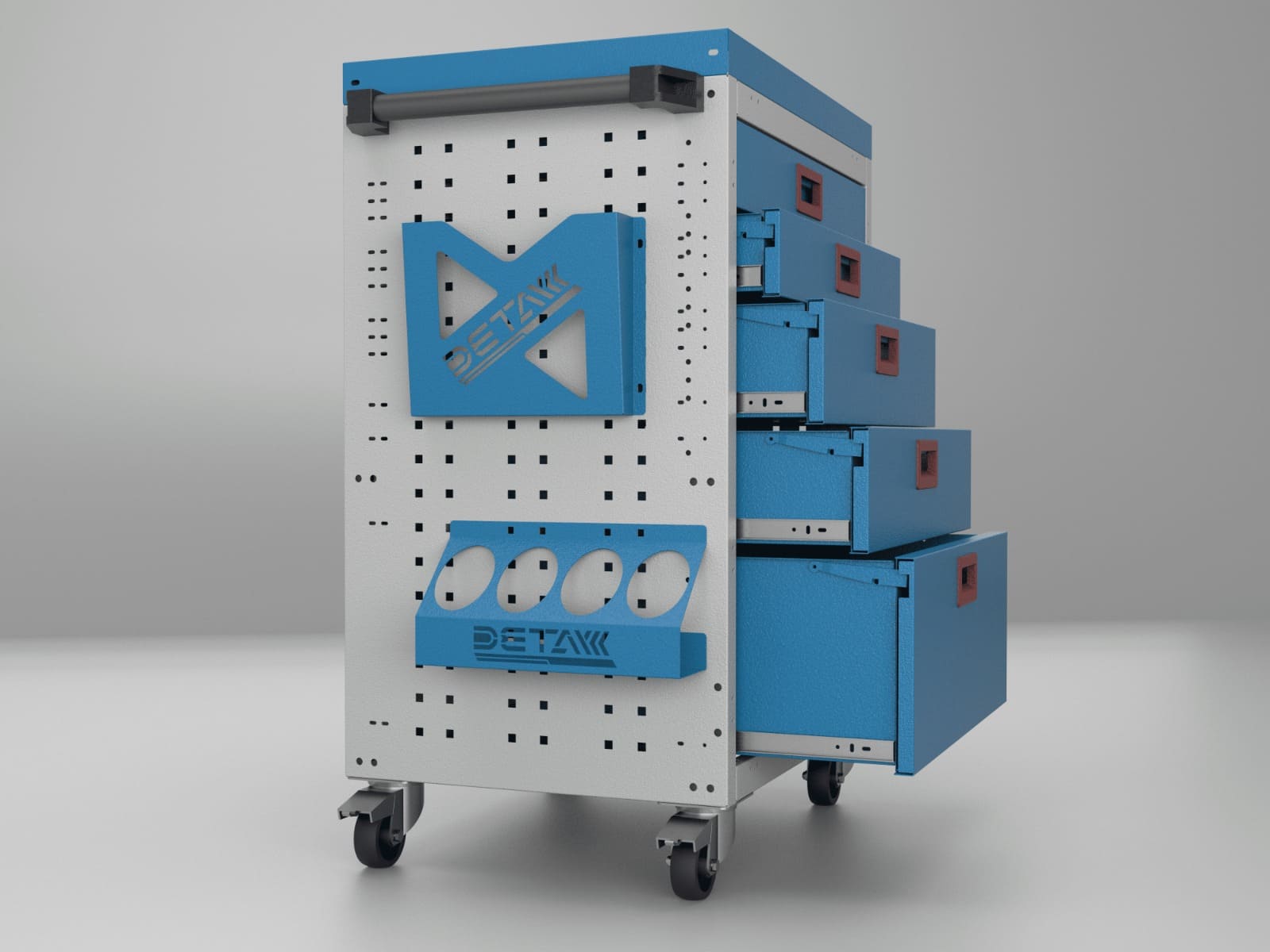
Medium density fiberboard provides a smooth and uniform surface that is easy to machine, drill, replace, cover, and integrate with steel workbench structures. It usually offers a quieter and less aggressive contact surface than bare sheet metal, which can be valuable during general assembly, packaging, component preparation, light maintenance, and work involving products that should not rest directly on steel. The official workbench information from Detay Endüstri describes robust sheet metal frames combined with MDF or similar tops and configurable drawers, shelves, lighting, and power modules, showing how the board can function as part of a complete industrial workstation rather than as an ordinary furniture panel.
MDF still needs careful protection from liquids and damaged edges. The United States Forest Service explains in its wood based composite materials guidance that fiberboard products may use wax and other treatments to improve water resistance, but such measures do not make every board suitable for prolonged wet exposure. Once water enters an unprotected edge, fixing hole, joint, or damaged coating, swelling can reduce flatness and weaken the affected area. For this reason, I recommend specifying the exact board grade, thickness, surface coating, edge treatment, underside protection, fixing method, and permitted cleaning routine instead of requesting only an MDF top.
Buyers should also request compliant composite wood products from a traceable supplier. The United States Environmental Protection Agency identifies MDF as one of the composite wood products covered by formaldehyde emission standards in its jurisdiction. Local legal requirements may differ, but the broader purchasing lesson remains useful: factories should know the origin and specification of the panel rather than treating every MDF board as identical. A well designed workbench can use a thick, sealed, and replaceable MDF surface for many dry industrial tasks, provided that the load and environment remain compatible with the complete bench design.
When Is an MDF Top the Right Choice?
I normally consider MDF when the workshop needs an economical, flat, and relatively quiet surface for controlled indoor operations such as product assembly, packaging, electrical cabinet preparation, tool organization, visual inspection, or light mechanical work. It can also provide a practical core beneath a replaceable rubber, PVC, laminate, galvanized sheet, or other application specific cover. The board thickness and supporting frame spacing matter because a large unsupported span may deflect even when the overall bench appears strong, while concentrated equipment such as a vice or small press may need a local reinforcement plate that distributes forces into the steel frame.
MDF is usually a weaker choice when the surface receives frequent water, aggressive chemicals, hot parts, welding sparks, heavy hammering, sharp cutting, or substantial concentrated loads without reinforcement. The top should not become a substitute for purpose designed rack systems when operators need to store bulky components, because excessive items placed permanently on the work surface reduce usable space and can hide damage. The bench should hold active work, while surrounding storage carries stock, tools, and materials according to a planned workflow.
Sheet Metal Tops Support Demanding Mechanical Work
A sheet metal top can provide a durable, nonabsorbent, and easily wiped working surface for maintenance, machining support, oily components, assembly fixtures, and environments where impacts or sharp objects would quickly damage an exposed board. The designer may use painted steel, galvanized sheet, or stainless steel according to corrosion, cleaning, hygiene, appearance, and process requirements, while the metal can be installed over a supporting core to reduce drumming and improve stiffness. The important question is not simply whether the top contains metal, but what alloy, thickness, finish, edge construction, support spacing, and fixing method the application requires.
Steel can tolerate many demanding workshop conditions, yet it also transmits sound and impact efficiently, may dent when too thin or poorly supported, can scratch painted products, and may feel cold during prolonged hand contact. Bare conductive surfaces also require proper evaluation around electrical systems, batteries, test equipment, and exposed circuits. A metal top does not automatically create an approved electrical grounding or electrostatic discharge workstation, and employees should never assume that any steel surface provides the resistance path required by a formal ESD program.
For food related or hygienic environments, buyers may need a smooth, durable, corrosion resistant, nonabsorbent, and easily cleanable surface. The United States Food and Drug Administration identifies these characteristics in its food safety guidance, although the final material and construction must satisfy the applicable local regulations and the exact intended contact conditions. Welds, joints, corners, fasteners, and surface finish matter as much as the main metal sheet because contamination and moisture can collect where the design leaves inaccessible gaps.
Do Not Treat Every Metal Top as a Welding Table
A sheet metal covered bench may resist oil and ordinary workshop impacts, but it should not automatically be used for welding, cutting, brazing, grinding, or other hot work. OSHA explains in its hot work requirements that heat, sparks, and slag must be controlled so they cannot contact combustible materials, while surrounding fire hazards require removal or protection. An MDF core hidden beneath a metal skin may remain vulnerable if heat reaches edges, openings, damaged sections, or fasteners, and coatings may introduce additional concerns when exposed to high temperatures.
Factories that perform regular hot work should request a purpose designed welding or fabrication table whose construction, grounding arrangements, ventilation context, accessories, and surrounding fire controls match the task. The planner should explain whether employees will tack weld small assemblies, perform continuous welding, use grinding tools, place recently heated parts on the top, or work only with cold components. Detay Industry can then distinguish a general metal covered bench from a workstation intended for more demanding thermal and mechanical conditions rather than allowing one vague description to cover several different risks. 🔥
Solid and Laminated Wooden Tops Provide Resilience
A solid or laminated wooden top can provide a warm, resilient, and tool friendly working surface for general maintenance, fitting, assembly, carpentry, pattern work, repair, and operations where employees want to reduce noise or protect components from direct metal contact. Thick hardwood or laminated blocks can absorb ordinary impacts better than brittle surface materials and can often be sanded or repaired when scratches and marks accumulate. The surface also accepts vices, stops, and fixtures readily when the design provides adequate thickness and distributes forces into the supporting structure.
Wood remains a natural material that responds to its environment. The United States Forest Service states in its guidance on wood and moisture that many challenges in using wood as an engineering material arise from changes in moisture content, including shrinkage, swelling, and dimensional movement. Species, grain orientation, lamination quality, moisture content, sealing, and factory humidity can therefore influence long term flatness and joint behavior. A workshop that regularly washes surfaces or experiences large humidity changes should not select an unfinished wooden top only because it feels strong when new.
Wood can work very well when the plant specifies a suitable species or laminated product, uses a compatible finish, seals vulnerable faces, and accepts that periodic sanding or refinishing may form part of maintenance. It is generally less suitable for uncontrolled hot work, persistent chemical exposure, or processes requiring a completely nonabsorbent hygienic surface. When a wooden top sits near a drawer rack system, the bench should support inspection and preparation activities without receiving heavy molds that belong on their engineered storage platforms.
Compare the Main Worktop Options
| Worktop Type | Typical Strengths | Important Limitations | Suitable Applications |
|---|---|---|---|
| MDF with a protective surface | Flat, economical, easy to replace, relatively quiet, and easy to customize | Edges and damaged areas can absorb moisture, while heavy concentrated loads need suitable reinforcement | Dry assembly, packaging, light maintenance, inspection, and general workshop use |
| Painted or galvanized sheet metal | Durable, wipeable, resistant to many ordinary workshop impacts, and suitable around oily components | Can be noisy, conductive, prone to dents when too thin, and capable of scratching finished parts | Mechanical maintenance, machining support, fixture preparation, and industrial assembly |
| Stainless steel | Corrosion resistant, nonabsorbent, durable, and easier to clean when properly fabricated | Higher cost, potential scratching, glare, noise, and a need to select the correct grade and finish | Clean production, food related applications, laboratories, and wet environments subject to applicable requirements |
| Solid or laminated wood | Resilient, repairable, quieter, comfortable for general fitting, and friendly to many tools and components | Responds to moisture, may absorb liquids when poorly sealed, and is unsuitable for uncontrolled hot work | General maintenance, fitting, woodworking, pattern work, repair, and assembly |
| Hybrid layered top | Combines the stiffness or resilience of a core with a replaceable process specific surface | Edges, joints, heat transfer, bonding, and replacement methods require careful design | Mixed maintenance tasks, configurable assembly areas, and operations with changing surface requirements |
This table should serve as a starting point rather than a purchasing specification, because the complete bench capacity depends on the frame, cross supports, legs, top fixing, floor contact, and load distribution. A thick surface does not correct a weak frame, and a heavy steel structure does not protect a poorly supported top from local deformation. The same engineering discipline used when selecting a mold rack or an injection rack should apply here: the buyer must provide real dimensions, weights, forces, and operating conditions rather than relying only on general material names.
Consider an ESD Surface for Electronics Work
Electronics assembly, testing, repair, and handling of sensitive control components require a specific electrostatic discharge control approach. MDF, ordinary wood, painted sheet metal, and stainless steel should not be assumed to provide the controlled resistance, grounding, testing, and verification required by an ESD program. The IEC 61340-5-1:2024 standard provides requirements for an ESD control program, while related IEC documents address testing and compliance verification. The work surface must function with personnel grounding, flooring, packaging, tools, environmental controls, training, and regular measurement rather than operating as an isolated accessory.
A factory handling sensitive modules should explain the component withstand levels, existing ESD program, required work surface resistance, grounding points, monitors, wrist straps, shelving, and verification procedure before ordering the bench. A protected in-vehicle tool cabinet may offer useful ideas for organizing test tools, but it does not make a stationary workbench ESD compliant, just as a conductive metal surface alone does not create a controlled electronics workstation. ⚡
Hybrid Tops Can Solve Mixed Workshop Requirements
Many factories do not need to choose one exposed material for every task. A thick MDF or laminated wooden core can provide stiffness, impact absorption, and lower noise, while a replaceable galvanized, stainless, rubber, PVC, laminate, or specialized protective layer can address cleaning or product contact requirements. Removable plates may protect high wear areas beneath a vice or fixture, while softer mats can protect finished components during assembly. The design should prevent liquids from entering hidden layers and should allow replacement without dismantling the entire bench.
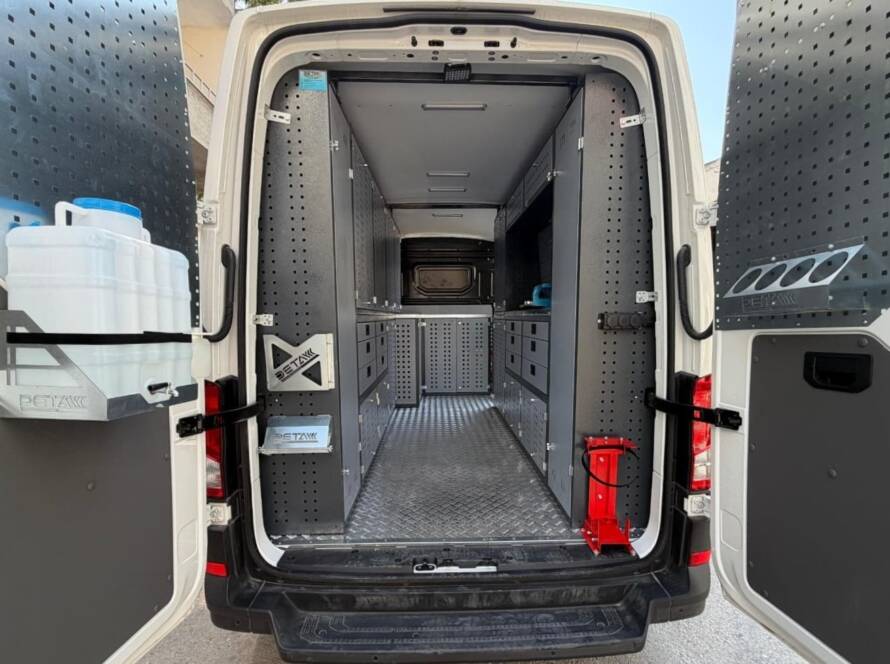
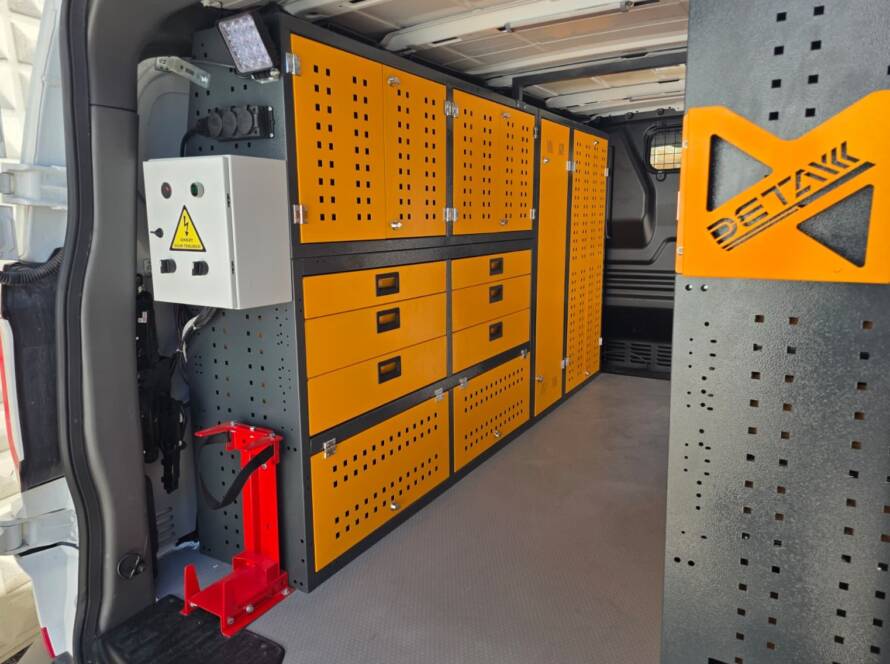
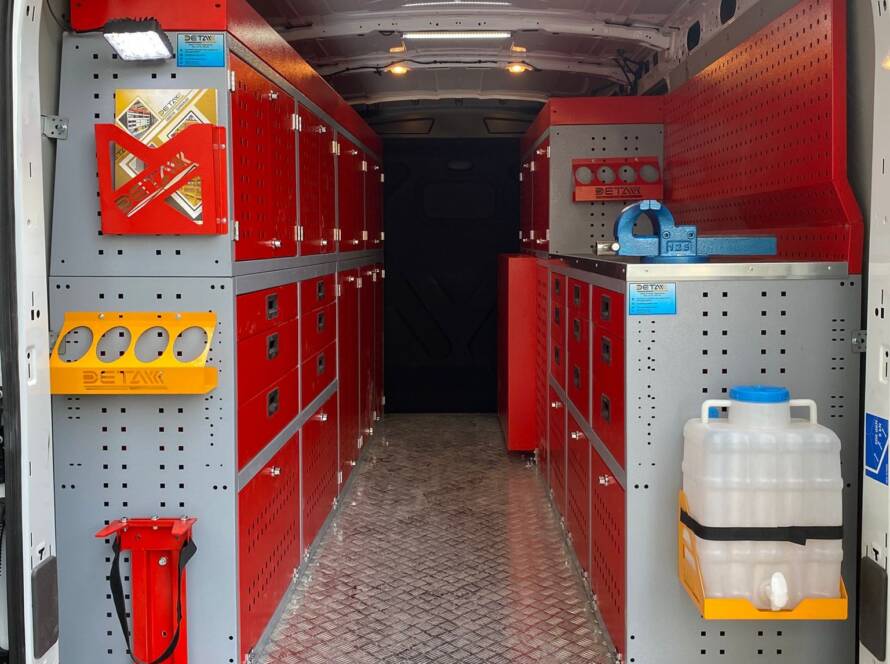
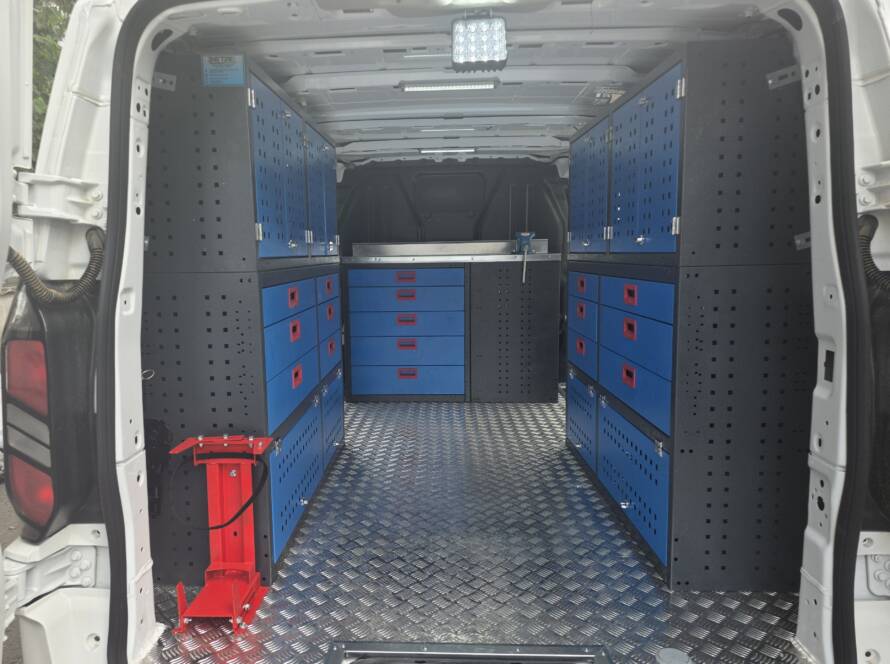
Hybrid construction needs careful review around heat because a metal covering can transfer temperature into an underlying combustible or moisture sensitive core. Edges should remain protected, fasteners should not create uncomfortable projections, and the top should not trap contaminants between layers. A modular in-vehicle cabinet system offers a useful design analogy because each material and compartment should perform a clearly defined role rather than duplicating functions without purpose. A custom workbench can follow the same philosophy by using the strongest material only where the process actually needs it.
Match the Top to Storage, Tools, and Material Flow
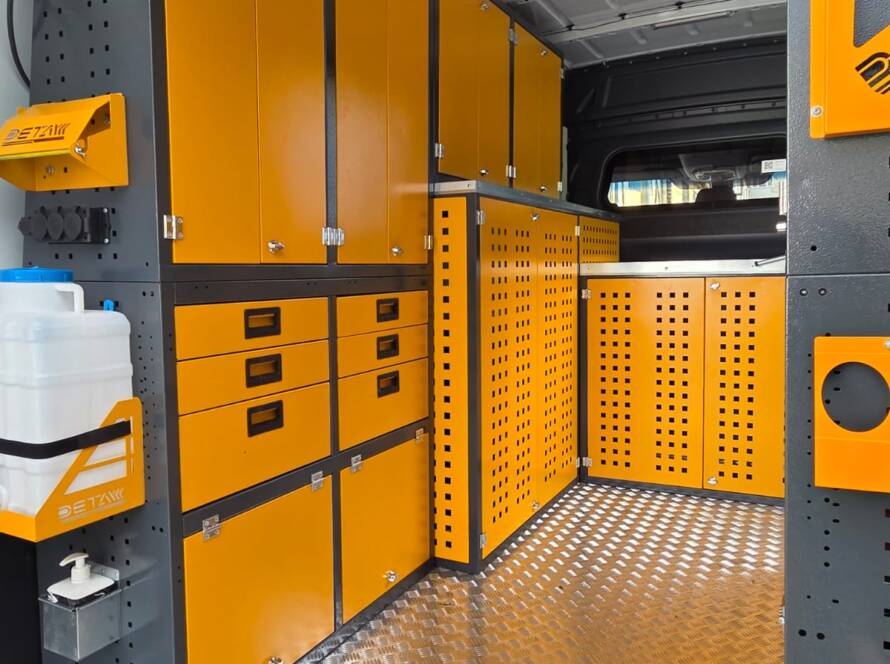
The worktop should not be selected separately from the drawers, shelves, perforated panels, lighting, power outlets, vices, holders, and component containers surrounding it. Heavy tools stored in high drawers may affect workstation stability, while an oversized top can tempt employees to accumulate unrelated materials. Frequently used equipment should stay within comfortable reach, dense items should remain low, and the active surface should preserve separate areas for incoming components, work in progress, measurement, and completed items.
The compartment logic used in an in-vehicle material cabinet can help planners separate fasteners, connectors, consumables, and maintenance materials, while the retention methods used in an in-vehicle equipment rack provide a reminder that heavy devices and removable equipment need defined positions. The workstation may remain stationary, but organized storage still prevents tools from damaging the chosen surface or occupying the area where employees need to work.
A Practical Worktop Selection Example
Imagine a factory that needs three benches for different departments. The first bench supports dry assembly of plastic and painted metal products, the second supports maintenance of oily pumps and gear units, and the third supports testing of electronic control modules. Purchasing the same top for all three stations may simplify the order, but it would ignore major differences in the work.
For the assembly bench, I would consider a thick sealed MDF or laminated wood based top with a replaceable protective surface that reduces scratching and noise. The maintenance bench could use a properly supported sheet metal or stainless covering selected according to oil, impact, cleaning chemicals, corrosion, and the expected concentrated loads beneath a vice. The electronics bench would require an ESD controlled top and grounding arrangement selected as part of the factory’s complete electrostatic discharge program. Each bench would also receive different drawers, lighting, outlets, and tool positions rather than sharing one standard configuration.
Before manufacturing, I would place representative products, fixtures, tools, containers, and cleaning materials on full size mockups, then ask the operators to perform normal tasks while the project team observes reach, glare, sound, component movement, cleaning access, and surface contact. This practical test would allow Detay Industry to refine the material thickness, edge construction, reinforcement points, drawer layout, and replaceable layers before production begins. The process may require more thought at the beginning, but it can prevent years of frustration caused by a worktop that looked suitable on a quotation and behaved very differently on the factory floor. 😊
Ask for a Complete Technical Specification
The quotation should state the core material, exposed surface, total thickness, edge treatment, underside protection, frame support spacing, distributed capacity, permitted concentrated loads, chemical resistance limitations, cleaning method, heat restrictions, fixing arrangement, replaceable parts, and warranty conditions. The customer should also confirm whether the top will carry a vice, press, monitor arm, test fixture, grinder, tool balancer, electrical equipment, or another permanently attached device. These accessories can introduce forces that a general distributed load figure does not fully describe.
Samples can help buyers compare texture, glare, sound, cleanability, scratch behavior, and product contact, but a small sample cannot demonstrate full structural performance. The final acceptance process should check flatness, dimensions, edge condition, fixing security, surface damage, drawer clearance, bench stability, and compatibility with the real process. Employees should review the workstation again after normal use begins because one operation may reveal an unprotected edge, noisy impact area, inconvenient reflection, or cleaning problem that was not obvious during installation.
Conclusion
MDF, sheet metal, and wooden workbench tops each offer meaningful advantages, but none of them provides the best answer for every industrial operation. MDF can deliver a flat, quiet, economical, and replaceable surface for controlled dry work, sheet metal can support demanding maintenance and cleanable applications when the grade, thickness, finish, and underlying structure suit the process, while solid or laminated wood can provide resilience, repairability, and comfortable tool contact in general assembly and fitting environments. Hybrid constructions can combine several benefits, while electronics, food related production, wet areas, chemicals, and hot work may require specialized surfaces and additional controls. 🌟 I see the ideal top as the working face of the entire bench, because it receives every product, tool, force, spill, inspection, and human movement that defines the task. By evaluating the real process, environmental exposure, load distribution, ergonomics, cleaning, utilities, and replacement strategy, Detay Industry can help manufacturers select a workbench top that remains practical, durable, and appropriate long after the new surface has lost its showroom shine.